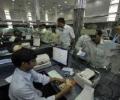
The overall debt servicing metrics of Indian corporates are weak.

Indian equity markets closed higher, driven by gains in PSU bank, auto, and financial stocks, following the US Supreme Court's decision on tariffs. Sensex climbed 479.95 points to 83,294.66, and Nifty advanced 141.75 points to 25,713.
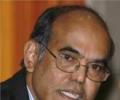
Subbarao also warned of attrition in PSBs, saying, "PSBs will lose talent to the private sector."

The finance ministry is considering a proposal by Indian Bank's Association to give post allowance to chairmen and executive directors of public sector banks, a key official said on Tuesday.

A government mandate requiring central public sector enterprises to use the Trade Receivables Discounting System (TReDS) for settling small business invoices is expected to significantly increase volumes on these platforms.
A major reshuffle of top executives in 11 PSU banks is on the cards with the chairmen of Allahabad Bank, Corporation Bank, Syndicate Bank, Union Bank of India and Vijaya Bank slated to retire between March-July 2006.

The re-invention that PSU banks have undergone recently is a great story.

Public sector banks (PSBs) have written off bad loans of about Rs 5.82 lakh crore in the last five financial years, Parliament was informed on Tuesday. During 2024-25, the loan write-off of PSBs was at Rs 91,260 crore, compared to Rs 1.15 lakh crore in the previous fiscal, Minister of State for Finance Pankaj Chaudhary said in a written reply to the Rajya Sabha.

The rally followed the govt's plan to bolster state-owned lenders.

As of June, the gross NPA of nationalised banks was 3.89 per cent and State Bank Group at 5.50 per cent.

'I would say restore the banks to health, get active board composed of professionals, then there will be an ideal situation for merger.'

A section of the public sector banking employees will go on two-day all-India strike from Wednesday to protest against financial sector reforms and outsourcing of jobs.
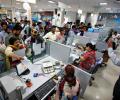
The Indian banking sector could be due for a rise in profitability after several quarters of net interest margin (NIM) compression. The Q2FY26 results suggest NIMs have bottomed out.

'The universe of PSU stocks is huge and diverse.' 'Investors should bet on specific sectors and stocks from the basket as most of them may continue to consolidate after years of outperformance.'

The World Bank and India have concluded negotiations for loans worth $3.2 billion for recapitalising state-run banks and funding for the India Infrastructure Finance Company Ltd, a state-run lender to infrastructure projects.
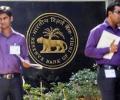
The decision to increase the quantum of capital infusion was taken at a meeting between Finance Minister P Chidambaram, RBI Governor Raghuram Rajan and Economic Affairs Secretary Arvind Mayaram in New Delhi.

The country's largest public sector lender State Bank of India on Monday fixed its benchmark lending rate at 7.5 per cent following a Reserve Bank directive, a move that will end the practice of sub-prime loan to corporates.

PNB reported the maximum number of such frauds.
Benchmark equity indices Sensex and Nifty extended their gains for the second straight session on Monday, driven by optimism over the India-US trade deal and robust buying in public sector banks, consumer durables, and realty stocks.
The Finance Ministry has called a meeting of heads of public sector banks to clear stalled projects.
Finance Minister P Chidambaram on Wednesday said public sector banks plan to hire 50,000 persons and open 10,000 branches in the current fiscal.
PSU bank stocks held the market's attention in morning trades on Tuesday as there's much anticipation that the Union Budget for 2003-04 may bring about the raising of foreign holding ceiling in these banks.
Stock markets closed higher for the second straight session on Tuesday, driven by gains in bank, IT and capital goods shares.

Central Bank of India's 21.5 per cent assets are either bad or have been restructured.

Bank of India, Canara Bank, Dena Bank, Corporation Bank and Andhra Bank are among the lenders that received capital infusion from the government.

Tata Motors was the biggest gainer in the Sensex pack, rallying 2.94 per cent. It was followed by Vedanta, Bajaj Finance, Sun Pharma, ONGC, ICICI Bank, Bajaj Auto, Tata Steel, RIL, HDFC duo, L&T and SBI, rising up to 2.78 per cent.

If they are made accountable, bad loan cases will shrink dramatically, recoveries will rise, and the NCLT process will be more manageable, asserts Debashis Basu.

Indian equity investors experienced a significant loss of 16.32 lakh crore due to a two-day stock market decline fueled by escalating geopolitical tensions involving the US, Israel, and Iran.

For the first time, PSU banks will have a non-executive chairman, giving operational responsibility to managing director and chief executive officer.
SBI, PNB, Bank of Baroda, Canara Bank, Dena Bank, Central Bank of India ended down 3%-12% each.

These PSU banks also account for the lion's share of bad loans or NPAs plaguing the sector and need crores of rupees in new capital in the next two years to meet global Basel III capital norms.

Arun Jaitley had promised to provide more than the budgeted amount.

The finance ministry has directed all state-owned banks to review their gold loan portfolio as instances of non-compliance with regulatory norms have been noticed by the government. The Department of Financial Services (DFS) in a communication addressed to heads of public sector banks has asked them to look at their system and processes related to gold loan. "We have asked banks to undertake comprehensive review of the gold loan business," financial services secretary Vivek Joshi told PTI.

'If the markets correct further, PSU stocks could continue to decline.'

Market sentiment is likely to remain cautious as investors position themselves for the upcoming Union Budget and the US Fed's interest rate decision, where expectations are muted.

Despite geopolitical tensions and FII outflows, Indian small and midcap stocks have not only recovered losses but are also outperforming largecap indices, driven by attractive valuations, domestic institutional support, and a rebound in earnings.

Among the Sensex constituents, Asian Paints, Tech Mahindra, HCL Technologies, Tata Steel, Maruti Suzuki India, Sun Pharmaceuticals, Tata Consultancy Services, ICICI Bank, Bajaj Finance, UltraTech Cement, Mahindra & Mahindra and Tata Motors Passenger Vehicles were the laggards. However, Eternal, Titan, Adani Ports, Bharat Electronics Ltd, State Bank of India, Bajaj Finserv, NTPC and Bharti Airtel were among the gainers.

The bank unions had threatened to go on 4-day strike from February 25.

The Reserve Bank of India (RBI) and the central government have introduced a package of measures, including tax exemptions for FPIs on government securities and a concessional foreign-exchange swap facility, aiming to attract up to $50 billion in foreign capital. This initiative is designed to strengthen India's balance of payments and potentially cover the projected BoP gap for FY27.

Indian markets on Dalal Street rallied sharply as easing tensions in the US-Iran conflict and stable oil prices boosted sentiment. Track Nifty 50 and BSE Sensex performance and key global triggers.
